islamic books minhajbooks.com islamic books minhajbooks.com minhajbooks.com minhajbooks.com minhajbooks.com
 Islamic Books minhajbooks.com
Home Islamic Books About us English Books Arabic Books Download Books Text format Books Contact Us Images format Books Buy Books at www.Minhaj.biz Urdu Books
Do you want more & more books to download for FREE? We need your help, it will be a great sadqa e jariah. Click for details...
Home
Complete Index
New Printed
New Online
New in Text
New in Images
Top Read
Top Downloads
Shaykh-ul-Islam
Farid-e-Millat
Dr Hussain Qadri
Online Sponsors
Reviews
Contact Us
The Quran
The Hadith
Science of Faith
Science of Beliefs
The Prophet's life
Finality
Jurisprudence
Morality
Religious Litanies
Economics
Ideologies
Constitutions
Celebrities
Islam & Science
Human Rights
Islamic Teachings
English Books
Poetry
Farid-e-Millat
H. Mohi-ud-Din
MISc
minhajbooks.com Read
Irfan-ul-Quran
Economics of Agriculture - Wheat
Exegesis of the Holy Quran (Sura al-Fatiha; Part-I)
Beginning the Qur’an with the Name of Allah
The Philosophy of Beginning with the Name of Allah
The Gnostic Secrets of the Name ‘Allah’
Scientific Research about ‘the Sustainer of the Worlds’
The Quranic Concept of ‘No Coercion in Din’
Arba‘in Series: Virtues of the Holy Prophet (PBUH)
Glad Tidings for the Believers about the Prophetic Intercession
The Rebuttal of Sayyiduna ‘Ali’s Sovereignty
Authentic Saying about the Awaited Imam: Mahdi (A.S.)
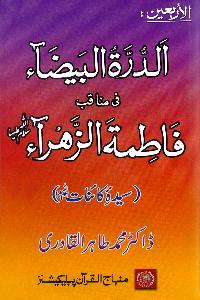
Glittering Pearls of the Virtues of Sayyida Fatima (S.A.)
Virtues of Imam Hasan and Imam Husayn (R.A.)
Merits and Virtues of Sayyiduna Abu Bakr (R.A.)
Virtues of the Remembrance of Allah and Rememberers
Full-shine Blessings of Invoking Salutations on the Exalted Prophet (PBUH)
Completion of Scripture with the Chains of Authority of Imam Abu Hanifa (R.A)
The Prophetic Enlightenment on Hanafite Chains of Authority
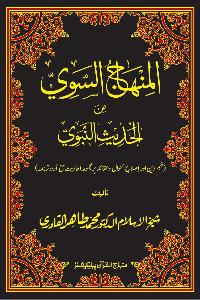
The Straight Road from the Prophetic Traditions
Merits and Virtues of Sayyiduna Umar b. al-Khattab
Merits and Virtues of Sayyiduna ‘Uthman b. ‘Affan
Merits and Virtues of Sayyiduna ‘Ali (R.A.)
The Reality of the Oneness of Allah and the Messengership
Belief in Messengership
Hypocrisy and its Signs
Book on Oneness of Allah (vol. I)
Book on Oneness of Allah (vol. II)
Post-Demise Life of the Prophet
Beseeching for Help and its Legal Status
Book on Intermediation
The City of Medina and Visit to the Prophet’s Mausoleum
Sending of Blessings to the Deceased and its Legal Status
Scholarly Judgment on Objections against Dreams and Glad Tidings
Innovation: Views of the Imams and Hadith-Scholars
Preamble to the Biography of the Messenger (PBUH) (part-I)
Biography of the Holy Messenger (PBUH)
Contemporary and International Importance of Biography of the Holy Messenger (PBUH)
The Light of Muhammad (PBUH): From Creation to Birth
The Birth of the Holy Prophet (PBUH)
History of Celebration of the Birth of the Holy Prophet (PBUH)
The Birth of the Holy Prophet (PBUH):
The Philosophy of Prophet’s Ascension (PBUH)
The Holy Prophet (PBUH):
The Holy Names of the Prophet (PBUH)
Attributes of the Holy Prophet (PBUH)
The Features of the Holy Prophet (PBUH)
The Blessings of the Prophet (PBUH)
The Virtues of Greetings and Salutations
The Captives of Prophet’s Beauty
Belief in the Finality of Prophethood
Belief in Finality of Prophethood and Mirza Ghulam Ahmad Qadian
Pillars of Islam
The Philosophy of Fasting
The Philosophy of Hajj
The Status of al-Hidaya and its Author in the History of Jurisprudence
The Dictates of the Islamic Law
Politics & International Relations
The Reality of Spiritualism
The Practical Guide for Mysticism and Spiritualism
Remembrance and the Company of the Pious
The Excellence of Actions
The Excellence of Morality
The Spiritual Disorder and its Cure
Life is a Clash between Good and Evil
Everyone is a Slave to his Likes and Dislikes
Our Real Homeland
The Qur’anic Way of Training
The Reality of Spiritual Retreat
The Blessings of Muhammad (PBUH)
The Supplications of Imam Zayn al-‘Abidin
The Islamic Concept of Knowledge
Reform-Seeking Aspects of Religious and Secular Science
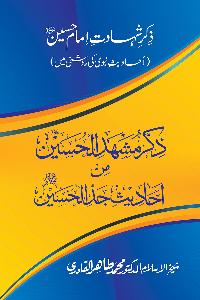
Martyrdom of Imam Husayn (A.S.):
The Great Slaughter—Isma‘il to Husayn (A.S.)
How to End Sectarianism?
Our Religious Decline and the Three-Pronged Path to Stem it
Gifted Capacity to Serve Religion
Quranic Philosophy of Preaching
The Objective of Raising of the Prophets (A.S.)
The Political Stand-off and its Islamic Solution
The Constitutional Analysis of Medina Pact
Islamic Concept of Imprisonment and Jail
The Life of Sayyida Khadija al-Kubra (R.A)
Life of Sayyida ‘A’isha Siddiqa (R.A.)
The Scholarly Discipline of Imam Ahmad Raza Khan (Brelvi)
Iqbal’s Dream and Today’s Pakistan
Iqbal and the message of the Prophet’s love
Iqbal’s Man of Faith
Islam and modern science
The Creation of Universe
The Eminent Station of Saints
Human Rights in Islam
Rights of Parents
Human Rights
Islamic Teachings Series (1): Teachings of Islam
Islamic Teachings Series (2): Faith (Iman)
Islamic Teachings Series (3): Peace and submission (Islam)
Islamic Teachings Series (4): Spiritual and Moral Excellence (Ihsan)
The Philosophy of Religious Reconstruction and Modern Age
The Path to Sermons on Fridays and ‘Id Days
The Compassion and Clemency of the Chosen Prophet (PBUH)
The Hanafite Manner of Ritual Prayer (in the Light of Prophetic Sunna)
An Explication of Tarawih Prayer
Supplication and Remembrance after Ritual Prayer
Warning to the Prophet’s Denigrators
The Philosophy of Human Rights and Proprieties
Glaring Signs of Merits and Virtues
Relationship of Servitude with Allah Almighty
Virtues of the Companions
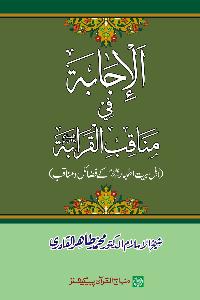
Virtues of Prophet’s Household
Merits and Virtues of the Mothers of the Believers (may Allah be well pleased with them)
Merits and Virtues of Saints and the Pious
Book on Innovation
The Glorious Quran
Sirat-ur-Rasul (PBUH), vol. 1
The Ghadir Declaration
The Awaited Imam
Creation of Man
Beseeching for Help (Istighathah)
Islamic Concept of Intermediation (Tawassul)
Greetings and Salutations on the Prophet (PBUH)
Spiritualism and Magnetism
Islam on Prevention of Heart Diseases
Islamic Philosophy of Human Life
Islamic Concept of Human Nature
Divine Pleasure (the Ultimate Ideal)
Islam and Freedom of Human Will
Islamic Concept of Law
Quranic Basis of Constitutional Theory
Creation and Evolution of the Universe
Virtues of Sayyidah Fatimah (S.A.)
Safarnama
Demands of Care in Beliefs
Seven Pillars of the Belief in Oneness of God
Belief in the Oneness of God and the Concept of other than Allah
The Best Way of Excellence of Merits and Virtues of Prophets (A.S.)
Rights of Children in Islam
Rights of Minorities in Islam
Rights of the Old and the Disabled in Islam
Women Rights in Islam
Basic Principles of the Study of Prophet’s Life
Constitutional Importance of Life of the Holy Messenger (PBUH)
Religious Significance of the Life of the Holy Messenger (PBUH)
The Scientific Import of the Biography of the Holy Messenger (PBUH)
The Administrative Import of the Biography of the Holy Messenger (PBUH)
The Aesthetic Exposition on the Prophet’s life
The State Import of the Biography of the Holy Messenger (PBUH)
The Blessed Objects and their Legal Status
Blessings of the Holy Qur’an and its Recitation
The Preliminaries of the Belief in Oneness of God
The Medials of Law
Visitation of Graves
Preamble to the Biography of the Messenger (PBUH) (part-II)
Belief in the Oneness of God and the Commonality of Attributes
Greetings for the Holy Prophet (PBUH) contained in the Qur’anic Surahs
The Alphabetic Names of the Holy Prophet (PBUH)
The Excellent Source of Salutations for the Birthday Celebrations
Intermediation: in the Eyes of Jurists and Hadith-Scholars
Economic System of Islam (Reconstruction)
Nisab e Itikaf
Islamic Concept of Knowledge
The Gnostic Secrets of Aya al-Kursi
Imam Abu Hanifa: The Leading Imam in Hadith (vol. I)
Ijtihad (meanings, application and scope)
Pearls of Remembrance
The Application of the Word ‘Innovation’
The Kinds of Innovation
The Personal and Prophetic Import of the Biography of the Holy Messenger (PBUH)
The Cultural and Civilizational Import of the Biography of the Holy Messenger (PBUH)
The Economic Significance of the Biography of the Holy Messenger (PBUH)
The Rightly-Guiding Dissertation on Principles of Prophetic Traditions and the Branches of Islamic Doctrine
Significance of Promoting Knowledge and Awareness
The Harmonious Way of Calling to Islam’s Peace Programme
Unveiling the Love of Inanimate and Animate Kingdoms for the Sovereign of the Pious
The Highness of the First in Creation and the Last in Messengership
The Majesty and Authority of the Holy Prophet (PBUH)
Unveiling the Gnosis of the Qur’anic Oaths for the Prophet (PBUH)
Elections or Electoral System?
Eulogy of the Beloved Prophet (PBUH), a Source of Inner Delight: Selected Quranic Verses and Traditions
Supplication and its Manners
Islam and Public Welfare
Islamic Concept of Ownership
The Basics of Islamic Economic System
Is Celebration of the Prophet’s Birth an Innovation?
Islamic Teachings Series (5): Cleanliness and Prayer
Intercession Substantiated by Fine Traditions
Imam Azam’s Benefitting from the Companions and Imams of Prophet’s Household
Imam Azam and Imam Bukhari (R.A.)
The Life and Raising of Jesus Christ and the Birth of the Awaited Imam
Charter of Guidance for the Muslim Umma Derived from the Qur’an and Hadith (vol. I)
Selection from Imam al-‘Asqalani’s Chains of Authority linked to the Leading Spiritualists and Gnostics of Divine Knowledge
Sayyiduna Siddiq Akbar’s Status of Nearness and Companionship
Collection of Prophetic Traditions on Divine Mercy
Seeking Blessings and Intermediation of the Holy Prophet (PBUH)
The Covenant of the Realm of Spirits and the Majesty of Allah’s Beloved Messenger (PBUH)
The Prophetic Glory on the Day of Reckoning
An Account of Imam A‘zam’s Hadith Collections (Masanid)
Remembering Farid al-Milla
Authentication of Hasan’s Hearing of ‘Ali (R.A.) - Urdu
The Excellence of Merits and Virtues of the Companions and Prophet’s Kindred
The Virtues of Greetings and Salutations and the Prophet’s Majesty
The Curricula of Training (part-I)
The Rituals of Milad Celebrations
Islamic Teachings Series (6): Fasting and Spiritual Retreat
Economics of Agriculture Industry in Pakistan Vol. 1
Economics of Natural Resources
Management
Economics of Natural Resources - Power
Poetry
Economics of Agriculture - Sugar
Establishment of Ritual Prayer, A Source of Deliverance
A Collection of the Prophet’s Supplications and Litanies
The Blessings of the Greetings and Salutations - Urdu
The Excellence of Merit of Fasting and Night Vigil
As-Subul al-Wahabiyya fi al-Asanid adh-Dhahabiyya
Al-Jawahir al-Bahira fi al-Asanid at-Tahira
Terrorism and the Tribulation of the Kharijites
Fatwa on Terrorism and Suicide Bombings
Arba‘in Series: Holy Names of the Messengeri (PBUH)
Arba‘in Series: Intermediation of the Prophet (PBUH)
Arba‘in Series: Blessings of the Visitation of the Prophet’s Mausoleum
The Prophetic Distinction in the Worldly Attributes
Protection of Life and Property of non-Muslims in an Islamic State
The Three Grades of Islamic Faith:
The Prophetic Majesty in the Pre-resurrection Attributes
Arba‘in Series: The Bestowing Mercy of the Beloved Messenger (PBUH)
Arba‘in Series: The Prophet (PBUH) is Alive
The Tribulation of Kharijites
Arba‘in Series: The Prophet’s Knowledge of the Unseen
al-Manhal-us-Safi fi Ziarat e Qabr-in-Nabi (PBUH)
Arba‘in Series: Nobility in Seeking Blessings from the Prophet i (PBUH)
Arba‘in Series: The Prophetic Authority on Legislative Matters
Arba‘in Series: Litanies after Obligatory Ritual Prayers
The Minhaj-ul-Quran Movement: The Concept of Din
Ijtimai Tehreeki Zindagi
Economics of Agriculture Industry in Pakistan Vol. 2
The Merits of Selected Chapters of the Holy Quran
The Sanctity of Muslim Blood
Saints’ Narration Series: Ibn al-Arabi’s Hadith Reports Contiguously Ascending (marfu‘ muttasil) to the Prophet (PBUH)
Saints’ Narration Series: Imam al-Sulami’s Hadith Reports Contiguously Ascending (marfu‘ muttasil) to the Prophet (PBUH)
Saints’ Narration Series: Imam al-Qushayri’s Hadith Reports Contiguously Ascending (marfu‘ muttasil) to the Prophet (PBUH)
Saints’ Narration Series: Imam al-Suharwardi’s Hadith Reports Contiguously Ascending (marfu‘ muttasil) to the Prophet (PBUH)
Masail e Zakat
The Pure Pearls of the Prophetic Features
The Exalted Meanings of the Prophetic Traits
Islamic Teachings Series (7): Hajj and Visitation
Arba‘in Series: The Companions’ Rapturous Love for the Beloved Messenger
Arba‘in Series: Virtues of the Rightly-Guided Caliphs
Arba‘in Series: The Remembrance of Sayyiduna ‘Ali (karam Allah wajhah al-karim)
Holy Journey
Belief in the Destiny
Arba‘in Series: The Faith-Inspiring Visitation of Graves
Arba‘in Series: The Faith-Inspiring Incidents of the Companions l in Obedience to the Prophet (PBUH)
Arba‘in Series: The Remembrance of the Companions (R.A.)
bad Intizami ya Azab e Elahi! Nijat kesay Mumkin hay?
Forty Prophetic Traditions on the Virtues of the Quran
Arba‘in Series: Excellence of Greetings and Salutations on the Holy Prophet (PBUH)
The Real Change in Pakistan—how and why?
Shaykh-ul-Islam: Tanqeed - Karnamy - Taasuraat
The Sublimity of the Prophetic Attributes
The Prophetic Conquests in the Post-resurrection Attributes
Arba‘in Series: Virtues of the Month of Ramadan
Arba‘in Series: Virtues of Supererogatory Fasting
Arba‘in Series: Virtues of the Destiny Night and Spiritual Retreat
Arba‘in Series: Blessings of Zakat
Arba‘in Series: Blessings of Charity
Arba‘in Series: Virtues of Hajj and Visitation
Arba‘in Series: Blessings of Donating Reward to the Deceased
Introduction to the Fatwa on Suicide Bombings and Terrorism
Namaz
Bedari-e-Shaoor (Zaroorat-o-Ahmiyyat)
Arba‘in Series: Farhatul-ul-Qulub fi Madh-in-Nabi al-Mahbub (S.W.A)
Arba‘in Series: Tuhfatu Nubala Fi Fadle Russule wl Anbiya
Arba‘in Series: Husn-ul-Kalam min Madah-e-Sahaba Khair un Anam (S.W.A)
Arba‘in Series: al-Madaih-ul-Hisan min Kalam-e-Hassan
Arba‘in Series: Idrak fi Fazl-il-Infaq wa Zam-il-Imsak
Arba‘in Series: Lawaami fi Fadl-il-Jawaami
Nuzool-ul-Farhatain fi Yawm-il-Eidayn
Siyasat nahin, Riyasat Bachao:
Islamabad Long March
Falsafa e Tehreek


Islamic Library - English Books > Greetings and Salutations on the Prophet (PBUH) > Salat and Salam is the Divine Practice

Greetings and Salutations on the Prophet (PBUH)

Click here to sponsor online version of this book.      

The Qur’anic verse pertaining to salat and salam is highly meaningful and replete with wisdom. Allah proclaims in the Qur’an as follows:
Undoubtedly, Allah and His angels send blessings on the Prophet (صلى الله عليه وآله وسلم). O believers! You (too) send your blessings upon him and salute him with all respect.[1]

All worships are accomplished under the subjection of Divine commandments. It is obligatory for Believers to show reverence to Divine commandments, as they have traditionally held a superior position. Divine laws have also changed with the passage of time and from nation-to-nation. New Prophets brought new Revelations often subjugating older Divine laws. In contrast to this Divine practice has been constant and abiding. Divine practice is an inevitable reality, entirely safe from all sorts of alterations and effects. The Qur’an states:

Yet you will never find any change in Allah’s practice.[2]

With the passage of time Divine practice is abiding and eternal. If we ponder over the Qur’anic verse, we come to know that conveyance of greetings to the Prophet (صلى الله عليه وآله وسلم) is not a commandment but also a Divine practice. This Divine practice will be abode and last for all times to come. The conveyance of salat and salam divulges the glory and sublimity of the Prophet (صلى الله عليه وآله وسلم) as well as exaltation of this pious act. Since there is no change and transition in the practice of Allah this act is free from any retrogression and change. It is incumbent upon the faithful to abide by Divine practice and to offer salutations to the Prophet (صلى الله عليه وآله وسلم).

As Allah Himself has acted upon this command this divine practice becomes the sunnah of Allah. This is unlike most of Allah’s other commands. All worships such as prayers, fasting, the pilgrimage, charity and donations are the commandments of Allah but not His sunnah. Allah neither performs hajj nor fasts nor prays. He is above all these things. All these duties and deeds are not His sunnah but the sunnah of the Prophet (صلى الله عليه وآله وسلم). So if a person offers prayers or goes to Makkah for the pilgrimage or keeps the fasts of Ramadan or gives the poor due or does any other virtue, he is following the sunnah of the holy Prophet (صلى الله عليه وآله وسلم) not the sunnah of Allah.

However, the showering of blessings and salutations upon the Prophet (صلى الله عليه وآله وسلم) is the Divine practice of Allah, His sunnah. As the glory of Allah is the highest and the most exalted, so His sunnah is also the highest and the most exalted. The Prophet (صلى الله عليه وآله وسلم) is the faithful and devotee of Allah. Amongst all of creation, his ranking is the highest and the most reverend. Yet regardless of this ranking and reverence, no human can be equal to the Creator. So in the same way, the sunnah of the Prophet (صلى الله عليه وآله وسلم) cannot equate with the sunnah of Allah (سبحانه و تعالى).

Secondly sending salat and salam (blessings and greetings) upon the Prophet (صلى الله عليه وآله وسلم), being the sunnah of Allah, is deemed the most esteemed and glorified act as compared to all others, a unique and peerless act. Salat and salam (blessings and greetings) is a Divine practice, whereas other acts are pertaining to humans. On account of being a Divine practice, it is preferential and exalted standing conspicuous and explicit. Allah is the Omnipotent, the One and Only and none is equal to Him. He is Infinite in His attributes, His qualities being above everything. So his sunnah is also unique, peerless and infinite. Contrary to Allah’s attributes, human attributes are limited. Human beings are Allah’s creation so they are limited in their powers and traits. They are subject to natural human constraints whereas Divine practice and attributes are not.

What is unique about this verse is that in order to convey the exalted status of Prophet Muhammad (صلى الله عليه وآله وسلم) Almighty Allah did not solely allow the Prophet (صلى الله عليه وآله وسلم) to convey this message to his followers but deemed it necessary to do so himself. This ensured for all times the paramouncy of Prophethood.


Perpetual Nature of Salat and Salam

If one studies commands relating to worship it can be noted that they are mostly conditional and subject to rules and regulations. There are different conditions for all kinds of worship. Take the example of the Muslims’ prayer. It has the binding of time. If time elapses, the specific prayer is deferred. If someone wants to perform the night prayer (‘Isha’) the next day, he is not allowed to do so because the time has elapsed. In the same way the afternoon prayer (‘Asr) cannot be performed in the evening. Similarly if someone wants to perform his sunset prayer (Maghrib) before sunset, he cannot do so.

Moreover, the Muslims’ prayer has some external form to be followed, namely the way the Prophet (صلى الله عليه وآله وسلم) performed it. Standing, bowing and prostration are required to be maintained in the prayer similar to the Prophet’s sunnah. The prayer will only be acceptable if all the parts of the prayer are executed as taught by Prophet Muhammad (صلى الله عليه وآله وسلم).

Fasting is also conditional and stipulated with time. The duration for the fast is from dawn to dusk. During this time, the observer of the fast abstains from eating, drinking and other religious prohibitions. If the observer of the fast does not abide by time, his fast will not be acceptable or if he eats during the fast, his fast will be futile. Since the fast warrants the observance of all its requisites it is also conditional in its apparent form.

All these examples indicate that the acts, which are the Prophet’s sunnah, have the binding of time and compliance with all its respective requisites. They are subject to the observance of forms and conditions of the acts because they belong to the sunnah of the creation. But salat and salam are the sunnah of the Creator, so they are free from all bindings of time and other subsidiary obligations.

A simple grammatical analysis of this verse helps elucidate this point further. In the Arabic language there are two types of sentences, jumlah fi‘liyyah — a verbal clause or sentence — and jumlah ismiyyah — a nominal clause or sentence. A verbal sentence is related to some specific time (past, present or future) and falls within the confines of any of the three specific times. Time is also temporal and transient. If it is present, it is about to elapse; if it is future, it is yet to come.

However, a nominal sentence is not related to time but spread over all times. It is lasting and abiding. After adhering to a name, it relates to all times; past, present and future. In this verse Allah the Almighty has opted to use a nominal sentence. Instead of using the past tense “…Allah and His Angels sent blessings…” or the future tense of “…Allah and His angels will send blessings…”, Allah has stated “Allah and his Angels send blessings…”. This is not a command or directive but a declaration and announcement of an event that is continuing to occur or news that is happening. As such blessings and salutations upon the Prophet (صلى الله عليه وآله وسلم) is an ongoing process, an act for all times, securing its perpetual nature.


Sending Salat and Salam whilst Standing

Allah has subjected His worship and the sunnah of His beloved Prophet (صلى الله عليه وآله وسلم) to bounds and binding but He has set His sunnah free from the same. That is why Allah has made His devotees free from restraint and binding whilst offering salat and salam. Greetings can be sent in any language. We can send our greetings to the Prophet (صلى الله عليه وآله وسلم) in Arabic, English, Hindi, Persian, Punjabi, Urdu or in any other language. Salat and salam can be sent in the form of prose or verse, silently or loudly, collectively or individually, It can be sent in imam Bawsiri’s invocation or in the melody of imam Ahmad Raza Khan because it is Allah’s sunnah. It is free from all restraints. In view of this, no one has the right to subject salat and salam to any condition of time, condition of place and condition of posture, i.e. of standing, sitting or lying down.

Unfortunately though this has become an unnecessary issue of controversy. Many recent commentators have declared that standing and reciting salat and salam upon the Prophet (صلى الله عليه وآله وسلم) is a form of innovation, bid‘ah and must never be done. Unfortunately this is a misguided view acted upon due to ignorance of the nature of shari‘ah. A principle of shari‘ah, denotes that any order in the Qur’an or sunnah which is in an absolute form, cannot be qualified. No conditions can be placed upon it. Similarly if a basic command has been revealed with qualifications then it too cannot be changed into an absolute command. By applying this Qur’anic principle to the verse in question, the commands of sallu ‘alayh and sallimu taslima, as far as their format and modality are concerned, are in the absolute form. There is no specification of type, no qualification in their form and thus no condition can be added to it.

In Islamic terminology the concept of ‘ibadah, worship, is a broad based one encompassing all acts that are done to seek the pleasure of Almighty Allah. Through this verse it has already been established that sending salat and salam on to the Holy Prophet (صلى الله عليه وآله وسلم) is considered a dhikr[3] of Allah, and the dhikr of Allah can be done in any manner – standing, sitting or lying down. There is no exclusion in manner or exclusivity in type. Allah the Almighty states in the Holy Qur’an:
Those who remember Allah while standing, sitting and lying on their sides.[4]

Sending salat and salam upon the Holy Prophet (صلى الله عليه وآله وسلم) is one of the azkar, remembrances of Allah. So according to the above verse it is permissible to send the blessings in any of the three ways. There is no specific Qur’anic verse or command which stipulates that sending blessings whilst standing is prohibited nor is there any contrary verse saying standing is preferable. The Qur’an is silent on this issue. This comes under the law of generality, which applies to all of the remembrances of Allah as pointed out in the verse above.

Despite this clear-cut view some people continue to criticize those who stand and recite salat and salam claiming standing constitutes a way of worship permissible only for Allah. Again this is a self-concocted argument with no base or rationale from the Qur’an or sunnah. The Qur’anic verse is clear-cut and concise in that remembrance of Allah is not solely restricted to the standing position but can be done in all three positions. Moreover, there is no differentiation or speciality in any one of the positions. Each holds an equal standing in merit. If the standing position is said to be disliked as it constitutes a position reserved for the worship of Allah alone, then sending blessings whilst sitting or lying down should also be banned as they are of equal merit and stature!

Finally there is no Muslim whose ‘aqidah is based on the premise that reciting salam whilst standing is done in the Prophet’s reception or that he arrives in some form during the recitation. This again is a false accusation which has no base at all. The only reason why Muslims stand whilst reciting salam is fulfilling the command of Allah that it must be done with utmost respect.


1. Qur’an (al-Ahzab) 33:56.
2. Qur’an (Fatir) 35:43.
3. Remembrance.
4. Qur’an (Al-‘Imran) 3:191.

Next >> Analytical Study of Salat and Salam
Introduction << Back

minhajbooks.com minhajbooks.com
Search Books
اردو English
minhajbooks.com
Join Us for Newsletter
Online Sponsors

Index Books
Nizam Badlo
Brief Contents Brief Contents  
Preface
Introduction
Chapter 1
Chapter 2
Chapter 3
Chapter 4
Chapter 5
Glossary
Bibliography
 Minhaj-ul-Quran International in Cyber Space
Minhaj-ul-Quran International | Minhaj Welfare Foundation | Minhaj-ul-Quran Women League | Minhaj Overseas | Muslim Christian Dialogue Forum (MCDF) | Gosha-e-Durood | Itikaf City | Irfan-ul-Quran | Islamic Multimedia | Islamic Library | Monthly Minhaj-ul-Quran | Monthly Dukhtran-e-Islam | Minhaj Encyclopedia (Urdu) |
Copyright © 1999 - 2013 Minhaj-ul-Quran International. All rights reserved.