islamic books minhajbooks.com islamic books minhajbooks.com minhajbooks.com minhajbooks.com minhajbooks.com
 Islamic Books minhajbooks.com
Home Islamic Books About us English Books Arabic Books Download Books Text format Books Contact Us Images format Books Buy Books at www.Minhaj.biz Urdu Books
Do you want more & more books to download for FREE? We need your help, it will be a great sadqa e jariah. Click for details...
Home
Complete Index
New Printed
New Online
New in Text
New in Images
Top Read
Top Downloads
Shaykh-ul-Islam
Farid-e-Millat
Dr Hussain Qadri
Online Sponsors
Reviews
Contact Us
The Quran
The Hadith
Science of Faith
Science of Beliefs
The Prophet's life
Finality
Jurisprudence
Morality
Religious Litanies
Economics
Ideologies
Constitutions
Celebrities
Islam & Science
Human Rights
Islamic Teachings
English Books
Poetry
Farid-e-Millat
H. Mohi-ud-Din
MISc
minhajbooks.com Read
Irfan-ul-Quran
Economics of Agriculture - Wheat
Exegesis of the Holy Quran (Sura al-Fatiha; Part-I)
Beginning the Qur’an with the Name of Allah
The Philosophy of Beginning with the Name of Allah
The Gnostic Secrets of the Name ‘Allah’
Scientific Research about ‘the Sustainer of the Worlds’
The Quranic Concept of ‘No Coercion in Din’
Arba‘in Series: Virtues of the Holy Prophet (PBUH)
Glad Tidings for the Believers about the Prophetic Intercession
The Rebuttal of Sayyiduna ‘Ali’s Sovereignty
Authentic Saying about the Awaited Imam: Mahdi (A.S.)
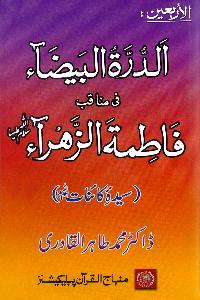
Glittering Pearls of the Virtues of Sayyida Fatima (S.A.)
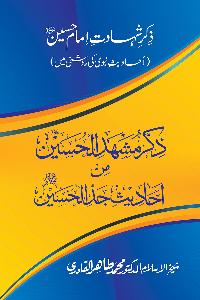
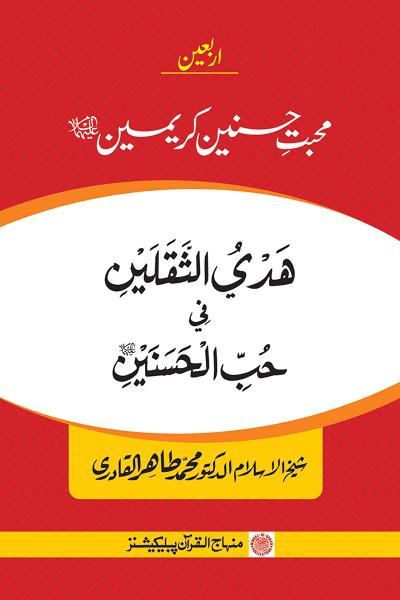
Virtues of Imam Hasan and Imam Husayn (R.A.)
Merits and Virtues of Sayyiduna Abu Bakr (R.A.)
Virtues of the Remembrance of Allah and Rememberers
Full-shine Blessings of Invoking Salutations on the Exalted Prophet (PBUH)
Completion of Scripture with the Chains of Authority of Imam Abu Hanifa (R.A)
The Prophetic Enlightenment on Hanafite Chains of Authority
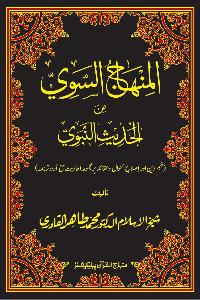
The Straight Road from the Prophetic Traditions
Merits and Virtues of Sayyiduna Umar b. al-Khattab
Merits and Virtues of Sayyiduna ‘Uthman b. ‘Affan
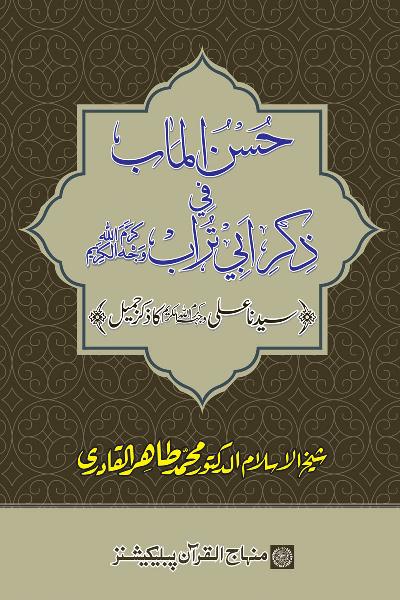
Merits and Virtues of Sayyiduna ‘Ali (R.A.)
The Reality of the Oneness of Allah and the Messengership
Belief in Messengership
Hypocrisy and its Signs
Book on Oneness of Allah (vol. I)
Book on Oneness of Allah (vol. II)
Post-Demise Life of the Prophet
Beseeching for Help and its Legal Status
Book on Intermediation
The City of Medina and Visit to the Prophet’s Mausoleum
Sending of Blessings to the Deceased and its Legal Status
Scholarly Judgment on Objections against Dreams and Glad Tidings
Innovation: Views of the Imams and Hadith-Scholars
Preamble to the Biography of the Messenger (PBUH) (part-I)
Biography of the Holy Messenger (PBUH)
Contemporary and International Importance of Biography of the Holy Messenger (PBUH)
The Light of Muhammad (PBUH): From Creation to Birth
The Birth of the Holy Prophet (PBUH)
History of Celebration of the Birth of the Holy Prophet (PBUH)
The Birth of the Holy Prophet (PBUH):
The Philosophy of Prophet’s Ascension (PBUH)
The Holy Prophet (PBUH):
The Holy Names of the Prophet (PBUH)
Attributes of the Holy Prophet (PBUH)
The Features of the Holy Prophet (PBUH)
The Blessings of the Prophet (PBUH)
The Virtues of Greetings and Salutations
The Captives of Prophet’s Beauty
Belief in the Finality of Prophethood
Belief in Finality of Prophethood and Mirza Ghulam Ahmad Qadian
Pillars of Islam
The Philosophy of Fasting
The Philosophy of Hajj
The Divine Text and its Interpretation
The Status of al-Hidaya and its Author in the History of Jurisprudence
The Dictates of the Islamic Law
Politics & International Relations
The Reality of Spiritualism
The Practical Guide for Mysticism and Spiritualism
Remembrance and the Company of the Pious
The Excellence of Actions
The Excellence of Morality
The Spiritual Disorder and its Cure
Life is a Clash between Good and Evil
Everyone is a Slave to his Likes and Dislikes
Our Real Homeland
The Qur’anic Way of Training
The Reality of Spiritual Retreat
The Blessings of Muhammad (PBUH)
The Supplications of Imam Zayn al-‘Abidin
The Islamic Concept of Knowledge
Knowledge—Acquired or Creative
Reform-Seeking Aspects of Religious and Secular Science
Martyrdom of Imam Husayn (A.S.):
The Great Slaughter—Isma‘il to Husayn (A.S.)
How to End Sectarianism?
Our Religious Decline and the Three-Pronged Path to Stem it
Gifted Capacity to Serve Religion
Quranic Philosophy of Preaching
The Objective of Raising of the Prophets (A.S.)
The Political Stand-off and its Islamic Solution
The Constitutional Analysis of Medina Pact
Islamic Concept of Imprisonment and Jail
The Life of Sayyida Khadija al-Kubra (R.A)
Life of Sayyida ‘A’isha Siddiqa (R.A.)
The Scholarly Discipline of Imam Ahmad Raza Khan (Brelvi)
Iqbal’s Dream and Today’s Pakistan
Iqbal and the message of the Prophet’s love
Iqbal’s Man of Faith
Islam and modern science
The Creation of Universe
The Eminent Station of Saints
Human Rights in Islam
Rights of Parents
Human Rights
Islamic Teachings Series (1): Teachings of Islam
Islamic Teachings Series (2): Faith (Iman)
Islamic Teachings Series (3): Peace and submission (Islam)
Islamic Teachings Series (4): Spiritual and Moral Excellence (Ihsan)
The Philosophy of Religious Reconstruction and Modern Age
The Path to Sermons on Fridays and ‘Id Days
The Compassion and Clemency of the Chosen Prophet (PBUH)
The Hanafite Manner of Ritual Prayer (in the Light of Prophetic Sunna)
An Explication of Tarawih Prayer
Supplication and Remembrance after Ritual Prayer
Warning to the Prophet’s Denigrators
The Philosophy of Human Rights and Proprieties
Glaring Signs of Merits and Virtues
Relationship of Servitude with Allah Almighty
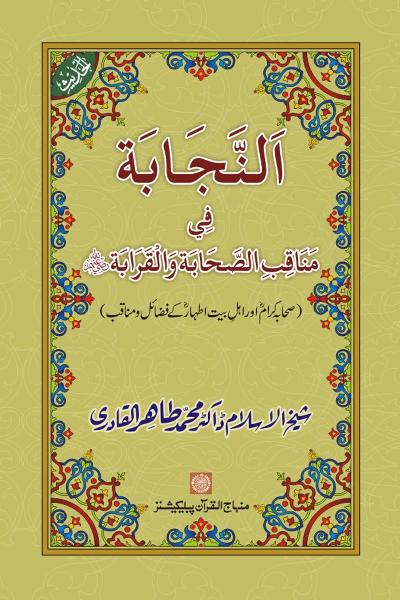
Virtues of the Companions
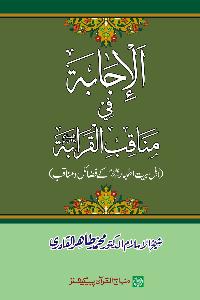
Virtues of Prophet’s Household
Merits and Virtues of the Mothers of the Believers (may Allah be well pleased with them)
Merits and Virtues of Saints and the Pious
Book on Innovation
The Glorious Quran
Sirat-ur-Rasul (PBUH), vol. 1
The Ghadir Declaration
The Awaited Imam
Creation of Man
Beseeching for Help (Istighathah)
Islamic Concept of Intermediation (Tawassul)
Greetings and Salutations on the Prophet (PBUH)
Spiritualism and Magnetism
Islam on Prevention of Heart Diseases
Islamic Philosophy of Human Life
Islamic Concept of Human Nature
Divine Pleasure (the Ultimate Ideal)
Islam and Freedom of Human Will
Islamic Concept of Law
Quranic Basis of Constitutional Theory
Creation and Evolution of the Universe
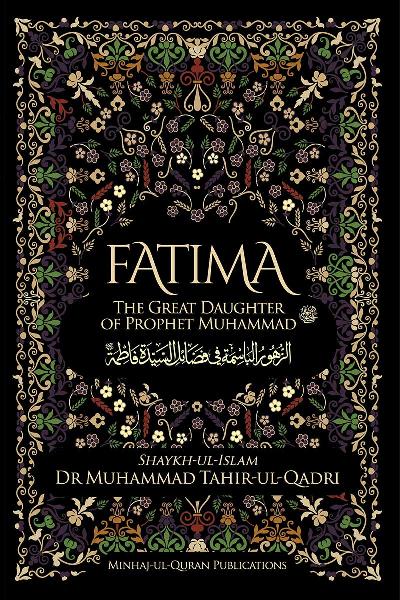
Virtues of Sayyidah Fatimah (S.A.)
Safarnama
Demands of Care in Beliefs
Seven Pillars of the Belief in Oneness of God
Belief in the Oneness of God and the Concept of other than Allah
The Best Way of Excellence of Merits and Virtues of Prophets (A.S.)
Rights of Children in Islam
Rights of Minorities in Islam
Rights of the Old and the Disabled in Islam
Women Rights in Islam
Basic Principles of the Study of Prophet’s Life
Constitutional Importance of Life of the Holy Messenger (PBUH)
Religious Significance of the Life of the Holy Messenger (PBUH)
The Scientific Import of the Biography of the Holy Messenger (PBUH)
The Administrative Import of the Biography of the Holy Messenger (PBUH)
The Aesthetic Exposition on the Prophet’s life
The State Import of the Biography of the Holy Messenger (PBUH)
The Blessed Objects and their Legal Status
Blessings of the Holy Qur’an and its Recitation
The Preliminaries of the Belief in Oneness of God
The Medials of Law
Visitation of Graves
Preamble to the Biography of the Messenger (PBUH) (part-II)
Belief in the Oneness of God and the Commonality of Attributes
Greetings for the Holy Prophet (PBUH) contained in the Qur’anic Surahs
The Alphabetic Names of the Holy Prophet (PBUH)
The Excellent Source of Salutations for the Birthday Celebrations
Intermediation: in the Eyes of Jurists and Hadith-Scholars
Economic System of Islam (Reconstruction)
Nisab e Itikaf
Islamic Concept of Knowledge
The Gnostic Secrets of Aya al-Kursi
Imam Abu Hanifa: The Leading Imam in Hadith (vol. I)
Ijtihad (meanings, application and scope)
Pearls of Remembrance
The Application of the Word ‘Innovation’
The Kinds of Innovation
The Personal and Prophetic Import of the Biography of the Holy Messenger (PBUH)
The Cultural and Civilizational Import of the Biography of the Holy Messenger (PBUH)
The Economic Significance of the Biography of the Holy Messenger (PBUH)
The Rightly-Guiding Dissertation on Principles of Prophetic Traditions and the Branches of Islamic Doctrine
Significance of Promoting Knowledge and Awareness
The Harmonious Way of Calling to Islam’s Peace Programme
Unveiling the Love of Inanimate and Animate Kingdoms for the Sovereign of the Pious
The Highness of the First in Creation and the Last in Messengership
The Majesty and Authority of the Holy Prophet (PBUH)
Unveiling the Gnosis of the Qur’anic Oaths for the Prophet (PBUH)
Elections or Electoral System?
Eulogy of the Beloved Prophet (PBUH), a Source of Inner Delight: Selected Quranic Verses and Traditions
Supplication and its Manners
Islam and Public Welfare
Islamic Concept of Ownership
The Basics of Islamic Economic System
Is Celebration of the Prophet’s Birth an Innovation?
Islamic Teachings Series (5): Cleanliness and Prayer
Intercession Substantiated by Fine Traditions
Imam Azam’s Benefitting from the Companions and Imams of Prophet’s Household
Imam Azam and Imam Bukhari (R.A.)
The Life and Raising of Jesus Christ and the Birth of the Awaited Imam
Charter of Guidance for the Muslim Umma Derived from the Qur’an and Hadith (vol. I)
Selection from Imam al-‘Asqalani’s Chains of Authority linked to the Leading Spiritualists and Gnostics of Divine Knowledge
Sayyiduna Siddiq Akbar’s Status of Nearness and Companionship
Collection of Prophetic Traditions on Divine Mercy
Seeking Blessings and Intermediation of the Holy Prophet (PBUH)
The Covenant of the Realm of Spirits and the Majesty of Allah’s Beloved Messenger (PBUH)
The Prophetic Glory on the Day of Reckoning
An Account of Imam A‘zam’s Hadith Collections (Masanid)
Remembering Farid al-Milla
Authentication of Hasan’s Hearing of ‘Ali (R.A.) - Urdu
The Excellence of Merits and Virtues of the Companions and Prophet’s Kindred
The Virtues of Greetings and Salutations and the Prophet’s Majesty
The Curricula of Training (part-I)
The Rituals of Milad Celebrations
Islamic Teachings Series (6): Fasting and Spiritual Retreat
Economics of Agriculture Industry in Pakistan Vol. 1
Economics of Natural Resources
Management
Economics of Natural Resources - Power
Poetry
Economics of Agriculture - Sugar
Establishment of Ritual Prayer, A Source of Deliverance
A Collection of the Prophet’s Supplications and Litanies
The Blessings of the Greetings and Salutations - Urdu
The Excellence of Merit of Fasting and Night Vigil
Al-Hadith Al-Asanid: As-Subul al-Wahabiyya fi al-Asanid adh-Dhahabiyya
Al-Hadith Al-Asanid: Al-Jawahir al-Bahira fi al-Asanid at-Tahira
Terrorism and the Tribulation of the Kharijites
Fatwa on Terrorism and Suicide Bombings
Arba‘in Series: Holy Names of the Messengeri (PBUH)
Arba‘in Series: Intermediation of the Prophet (PBUH)
Arba‘in Series: Blessings of the Visitation of the Prophet’s Mausoleum
The Prophetic Distinction in the Worldly Attributes
Protection of Life and Property of non-Muslims in an Islamic State
The Three Grades of Islamic Faith:
The Prophetic Majesty in the Pre-resurrection Attributes
Arba‘in Series: The Bestowing Mercy of the Beloved Messenger (PBUH)
Arba‘in Series: The Prophet (PBUH) is Alive
The Tribulation of Kharijites
Arba‘in Series: The Prophet’s Knowledge of the Unseen
al-Manhal-us-Safi fi Ziarat e Qabr-in-Nabi (PBUH)
Arba‘in Series: Nobility in Seeking Blessings from the Prophet i (PBUH)
Arba‘in Series: The Prophetic Authority on Legislative Matters
Arba‘in Series: Litanies after Obligatory Ritual Prayers
The Minhaj-ul-Quran Movement: The Concept of Din
Ijtimai Tehreeki Zindagi
Economics of Agriculture Industry in Pakistan Vol. 2
The Merits of Selected Chapters of the Holy Quran
The Sanctity of Muslim Blood
Saints’ Narration Series: Ibn al-Arabi’s Hadith Reports Contiguously Ascending (marfu‘ muttasil) to the Prophet (PBUH)
Saints’ Narration Series: Imam al-Sulami’s Hadith Reports Contiguously Ascending (marfu‘ muttasil) to the Prophet (PBUH)
Saints’ Narration Series: Imam al-Qushayri’s Hadith Reports Contiguously Ascending (marfu‘ muttasil) to the Prophet (PBUH)
Saints’ Narration Series: Imam al-Suharwardi’s Hadith Reports Contiguously Ascending (marfu‘ muttasil) to the Prophet (PBUH)
Masail e Zakat
The Pure Pearls of the Prophetic Features
The Exalted Meanings of the Prophetic Traits
Islamic Teachings Series (7): Hajj and Visitation
Arba‘in Series: The Companions’ Rapturous Love for the Beloved Messenger
Arba‘in Series: Virtues of the Rightly-Guided Caliphs
Arba‘in Series: The Remembrance of Sayyiduna ‘Ali (karam Allah wajhah al-karim)
Holy Journey
Belief in the Destiny
Arba‘in Series: The Faith-Inspiring Visitation of Graves
Arba‘in Series: The Faith-Inspiring Incidents of the Companions l in Obedience to the Prophet (PBUH)
Arba‘in Series: The Remembrance of the Companions (R.A.)
bad Intizami ya Azab e Elahi! Nijat kesay Mumkin hay?
Forty Prophetic Traditions on the Virtues of the Quran
Arba‘in Series: Excellence of Greetings and Salutations on the Holy Prophet (PBUH)
The Real Change in Pakistan—how and why?
Shaykh-ul-Islam: Tanqeed - Karnamy - Taasuraat
The Sublimity of the Prophetic Attributes
The Prophetic Conquests in the Post-resurrection Attributes
Arba‘in Series: Virtues of the Month of Ramadan
Arba‘in Series: Virtues of Supererogatory Fasting
Arba‘in Series: Virtues of the Destiny Night and Spiritual Retreat
Arba‘in Series: Blessings of Zakat
Arba‘in Series: Blessings of Charity
Arba‘in Series: Virtues of Hajj and Visitation
Arba‘in Series: Blessings of Donating Reward to the Deceased
Introduction to the Fatwa on Suicide Bombings and Terrorism
Namaz
Bedari-e-Shaoor (Zaroorat-o-Ahmiyyat)
Arba‘in Series: Farhatul-ul-Qulub fi Madh-in-Nabi al-Mahbub (S.W.A)
Arba‘in Series: Tuhfatu Nubala Fi Fadle Russule wl Anbiya
Arba‘in Series: Husn-ul-Kalam min Madah-e-Sahaba Khair un Anam (S.W.A)
Arba‘in Series: al-Madaih-ul-Hisan min Kalam-e-Hassan
Arba‘in Series: Idrak fi Fazl-il-Infaq wa Zam-il-Imsak
Arba‘in Series: Lawaami fi Fadl-il-Jawaami
Nuzool-ul-Farhatain fi Yawm-il-Eidayn
Siyasat nahin, Riyasat Bachao:
Islamabad Long March
Falsafa e Tehreek


Islamic Library - English Books > Beseeching for Help (Istighathah) > Purging disbelief in Muhammad

Beseeching for Help (Istighathah)

Click here to sponsor online version of this book.      

Allāh has conferred infinite blessings on the followers of the Holy Prophet (صلى الله عليه وآله وسلم). One of these blessings is their impossibility to return to disbelief after embracing Islam. It happened in the past that the followers of a particular prophet returned to their earlier state of ignorance and disbelief after his death. But this shall not happen to the followers of the Holy Prophet (صلى الله عليه وآله وسلم). The Prophet of Allāh(صلى الله عليه وآله وسلم) in the last days of his earthly sojourn had himself declared that he had no fears that his followers will relapse into disbelief after his death. As Muslims, we should reflect on his words. The Prophet (صلى الله عليه وآله وسلم) who was sent to this world to quash disbelief and all forms of impermissible innovation, who is our primary source of guidance and who is our ultimate means of salvation, is saying that he has no doubts lurking in his mind about our steady and irreversible belief, while we are hurling allegations of disbelief at one another to cater to our false sense of superiority or to pamper our egotism based on prejudice and sheer stubbornness. What could be more unfortunate than this mutual incrimination?

It is narrated in a tradition:

‘Uqbah bin ‘Āmir has narrated: The Prophet (صلى الله عليه وآله وسلم) one day went (to Uhud) and offered prayer for the natives (martyrs) of Uhud as it is (generally) offered for the dead. Then he returned to the pulpit and said: ‘I am your forerunner and I am a witness on you. By Allāh! I am right now seeing the basin of my fountain (kawthar), and I have been handed over the keys of the treasures of the earth (or the keys of the earth). I swear on Allāh, I have no fears that after me you will return to disbelief but I am apprehensive that you will try to outdo each other in acquiring worldly goods.’[1]

This is a statement made by the Prophet (صلى الله عليه وآله وسلم) himself. He has sworn on Allāh about his followers that they will not revert to disbelief. The Prophet’s words call for deep reflection and serious soul-searching. We brush aside the Prophet’s statement when we accuse one another of disbelief. This tradition has been reproduced by Imām Muslim[2] and Imām Ahmad bin Hambal[3]. Repeated references to this tradition by people of such calibre and prestige, and our dogged defiance of its contents are nothing but harrowing unawareness of the real spirit of our faith.

Istighāthah, which has been established as a valid act in Islam by countless Qur’ānic injunctions and authentic and certified traditions and which has been practised by the large majority of Muslims, is now turned into a matter of dispute and controversy, and is now being used as a convenient ploy to not only indulge in incriminating one another in disbelief but also to give vent to our personal frustrations. If we care to reflect on his words and statements, we will come to realise that to insist on the illegality of beseeching for help, either as a doctrine or in some of its actual applications, especially when its legality has been conclusively established both by the Qur’ān and the sunnah, is nothing but religious perversity. Tens of statements made by the Holy Prophet (صلى الله عليه وآله وسلم) are witness to the fact that to call someone for help other than Allāh is quite consistent with Qur’ānic commands and the Prophet’s statements.

As it is reported by ‘Amr bin Shu‘ayb that his grandfather says: we were present in the company of the holy Prophet (صلى الله عليه وآله وسلم) when messengers from Hawāzin tribe came and said, “O Muhammad! We belong to the same origin and tribe, and the trouble we are facing is not hidden from you, therefore, have mercy on us.” The holy Prophet (صلى الله عليه وآله وسلم) replied, “Opt one of the two choices; either take away your property and wealth or have your women freed.” They opted for their women and children. Then the Messenger of Allāh (صلى الله عليه وآله وسلم) added: as far as my share and the share of ‘Abd-ul-Muttalib and his children (in the spoils) is concerned, I have already given it to you. But when I have performed the noon prayer, you should all stand up and say:

Through the means of the Messenger of Allāh (صلى الله عليه وآله وسلم) we seek help for our women and children from believers (or Muslims).[4]

The narrator says that when people had finished their prayer, they repeated the same words as the Prophet (صلى الله عليه وآله وسلم) had advised them. These words were uttered by the sacred tongue of the holy Prophet (صلى الله عليه وآله وسلم) himself and he uttered them in the form of a command. Therefore, this tradition furnishes a cogent justification for the act of beseeching for help.

Figurative relation between belief and disbelief

To hold the holy Prophet (صلى الله عليه وآله وسلم) and the saints and pious people of Allāh in reverence and to beseech them for help is quite compatible with the basic principles of Islamic faith. But sometimes the petitioners, while addressing these favourites of Allāh, employ words, which are reserved only for Allāh and, therefore, according to some religious scholars, commit disbelief. This conclusion is based on a fundamental misconception as these scholars fail to draw the vital distinction between the literal and figurative sense of these words. They interpret these modes of address or the vocative forms in a literal sense and thus wring a perverse conclusion from them. It is an admitted fact that these modes of address are used only for Allāh in their absolute sense, therefore, to use them for any other creature is obviously disbelief and for a Muslim it is simply inconceivable. Thus a basic distinction must be drawn between their literal and figurative meaning. The literal sense applies to Allāh alone and no creature, whether he is a prophet or a saint, can arrogate to himself this exclusive divine prerogative. Therefore, the petitioner is using the words only figuratively and it is in this sense alone that they are generally interpreted. The allegation of disbelief against these people is quite misplaced; it reflects rather the twisted consciousness of those who hurl such malicious allegations against them. The petitioners are, in fact, immune to disbelief. For instance:

  1. O, the most reverend (Prophet) of all creatures! I have no one else as my (helper) except you whose help should I seek at a time when I am engulfed by troubles and calamities.

  2. There are five (friends) for me with which I extinguish the intensity of a lethal epidemic. (These are:) the holy Prophet Muhammad (صلى الله عليه وآله وسلم), ‘Alī, both of his sons (Hasan and Husayn) and Fātimah.

  3. All this is an expression of your mercy and magnanimity that I am still surviving in the midst of trouble and turmoil.

  4. I beg the charity of your magnanimous eye as there is no one except you to bail me out in this hour of distress.

  5. All people have some support to rely upon when they are down and out, but I have no one else except you to turn to when I am in trouble.

Similarly, some Muslims in different situations, while addressing the Holy Prophet (صلى الله عليه وآله وسلم) use these words like “O Messenger of Allāh! We have no other shelter except you.” If we interpret these words in their literal sense, obviously we would like to conclude that the person using them is committing disbelief. But the fact is that a Muslim is not using them in their absolute sense. Any Muslim who uses these words is fundamentally motivated by the belief that the power of the Holy Prophet (صلى الله عليه وآله وسلم) is only derivative as it is contingent on divine will. He is in fact saying through his mode of address: ‘after Allāh, the Prophet (صلى الله عليه وآله وسلم) is my place of shelter, and after Allāh, it is his support that can serve as a means of help and salvation for a sinner like myself.’ Thus he is not equating the Prophet (صلى الله عليه وآله وسلم) with Allāh Who is unique and from Whose favour the Prophet (صلى الله عليه وآله وسلم) derives his exceptional status among the creatures of Allāh. So he is saying: ‘I have no one else except you among Allāh’s creatures and I have no expectations from other creatures except you.’ Thus he is not elevating the Prophet (صلى الله عليه وآله وسلم) to the level of divinity, he is only stressing his exceptional status among the creatures. Though we normally do not use these ambiguous words during intermediation or at the time of beseeching help from others, nor do we encourage others to make use of them to pre-empt even the slightest suspicion of disbelief, we also regard it as necessary to propose that a person using these words figuratively and derivatively should not be accused of disbelief in a fit of misplaced enthusiasm or an overplay of religious sentiment.

It is more pertinent to realise that we should not entertain unnecessary suspicions about the integrity of their faith; instead of making them hostages of our crude sense of justice, we should display a reasonable degree of open-mindedness to give them the benefit of doubt. Before hurling at them the accusation of disbelief, we should try to probe into their real intentions; before convicting them, we should presume them innocent and refrain from equating their figurative expressions with literal statements. We all know, and only a sense of perversion can contradict this gut feeling, that these petitioners seeking help from others believe in divine unity, which is quite consistent with the basic postulates of Islamic faith and attested by the Messengership of the Holy Prophet(صلى الله عليه وآله وسلم). They offer prayer and pay zakāt. When they follow the basic tenets of Islam, not as an eyewash but as a demonstration of commitment, then it will not be an act of wisdom to drive them out of the fold of Islam simply because they use a string of ‘undesirable’ expressions in their supplications in a figurative sense. Truly speaking, they are “more sinned against than sinning”[5] as the punishment seems to exceed their innocuous act. Anas bin Māik has reported that the Prophet (صلى الله عليه وآله وسلم) said:

Anyone who prays like us and makes our qiblah as his qiblah and eats our slaughtered meat, so he is a Muslim for whom Allāh and His Messenger (صلى الله عليه وآله وسلم) are both responsible. So do not break Allāh’s responsibility.[6]

In view of this sound tradition, there is hardly any scope left to level the allegation of infidelity against the Muslims who use these words figuratively. This figurative application is sanctioned by the Qur’ān and the hadīth and demonstrated by the practice of the Companions, not sparingly but frequently and therefore, its reality cannot be denied. And there is no harm to declare their application as a valid act if a believer uses them figuratively. According to the correct Islamic belief, a person who believes that Allāh alone is the Creator and the Master, and He alone has empowered His creatures to perform different acts, and He is absolutely independent of the leanings and cravings of the living and the dead, that is, it is the exclusive divine privilege to grant or reject the wish of a creature, no matter how highly placed he is, such a person is a true believer and a true Muslim. This is precisely what is meant by divinity and this is exactly what Islam stands for. It is proved by Jibrīl’s dialogue with Maryam (Mary) in which he had stressed his derivative power in relation to the absolute power of Allāh. It meant that his act was not self-prompted but both sanctioned and sanctified by the will of the Lord who is One and Unique. The Qur’ān declares it in these words:

So that I should bless you with a pure son.[7]

When the chief of Allāh’s creatures of light can attribute these figurative words to himself, and Allāh Himself is reinforcing them in the Qur’ān, then if a creature of flesh and bone attributes them to the holy Prophet (صلى الله عليه وآله وسلم), then what crime has he committed or what sin has he perpetrated? What is urgently needed is to understand the essence of the Qur’ān itself so that the Muslims stop condemning one another, inflating one set of beliefs while deflating others, and in the process giving a bad name to their faith. This is the only way to preserve the integrity of our religion and to retain the purity of our faith.

The last word

Here, summing up the discussion, we would like to rephrase the vital point stated earlier that, in the present times, some people have cast aside the basic difference between the literal and figurative meanings in the interpretation of Qur’ānic verses. Moreover, their interpretation is marked by imbalance and extremism, which blatantly violates the basic principles of Qur’ānic exegesis. They prop up their interpretation on the literal sense and are not willing to concede the figurative sense. This is the reason that their interpretations are deflected from the established and authentic consensus of the traditions and the early religious leaders and scholars deeply charged with the true spirit of their faith and make sheer opinion and speculation as the basis of their conclusions. This is nothing but individualism gone haywire. They are interjecting undesirable innovations into our religious fabric and disfiguring its texture by their insensible and insensitive deviations from certified and well-documented explanations. The other group that has discarded the sobering crutches of balance has displayed such extremism in its application and patronage of the figurative sense that it appears to have lost all sense of balance, while balance is a sine qua non of all sane interpretation. If we keep in view the Qur’ānic sense of balance, the chasm between the two extremes can be abridged and the Muslim community will be transformed once again into an indivisible unity. This is the only way to preserve our faith and to perpetuate a correct interpretation of the nature and essence of divine unity.


[1]. Bukhārī narrated this tradition in his as-Sahīh with different words at six various places, i.e. b. of janā’iz (funerals) ch.71 (1:451#1279); b. of manāqib (virtues) ch.22 (3:1317#3401); b. of maghāzī (the military expeditions led by the Prophet) ch.14, 25 (4:1486, 1498-9 #3816, 3857); b. of riqāq (softening of hearts) ch.7, 53 (5:2361, 2408#6062, 6218); Tabarānī, al-Mu‘jam-ul-kabīr (17:278-80#767-70); Bayhaqī, as-Sunan-ul-kubrā (4:14); Baghawī, Sharh-us-sunnah (14:39-41#3822-3); and ‘Alī’ al-Hindī in Kanz-ul-‘ummāl (14:416#39122).

[2]. Narrated in his as-Sahīh, b. of fadā’il (virtues) ch.9 (4:1795 #30/2296).

[3]. Narrated in his Musnad (4:149, 153-4).

[4]. Nasā’ī, Sunan, b. of hibah (gifts) 6:262-3.

[5]. Shakespeare, King Lear.

[6]. Bukhārī narrated it in his as-Sahīh, chs. of qiblah, ch.1 (1:153#384); and Nasā’ī in his Sunan, b. of aymān wa sharā’i‘ahū (8:105).

[7]. Qur’ān (Maryam, Mary) 19:19.


Next >> Glossary
Religious Leaders and Istighathah << Back

minhajbooks.com minhajbooks.com
Search Books
اردو English
minhajbooks.com
Join Us for Newsletter
Online Sponsors

Index Books
Nizam Badlo
Brief Contents Brief Contents  
Foreword
Chapter 1
Chapter 2
Chapter 3
Chapter 4
Chapter 5
Chapter 6
Glossary
Bibliography
 Minhaj-ul-Quran International in Cyber Space
Minhaj-ul-Quran International | Minhaj Welfare Foundation | Minhaj-ul-Quran Women League | Minhaj Overseas | Muslim Christian Dialogue Forum (MCDF) | Gosha-e-Durood | Itikaf City | Irfan-ul-Quran | Islamic Multimedia | Islamic Library | Monthly Minhaj-ul-Quran | Monthly Dukhtran-e-Islam | Minhaj Encyclopedia (Urdu) |
Copyright © 1999 - 2013 Minhaj-ul-Quran International. All rights reserved.